


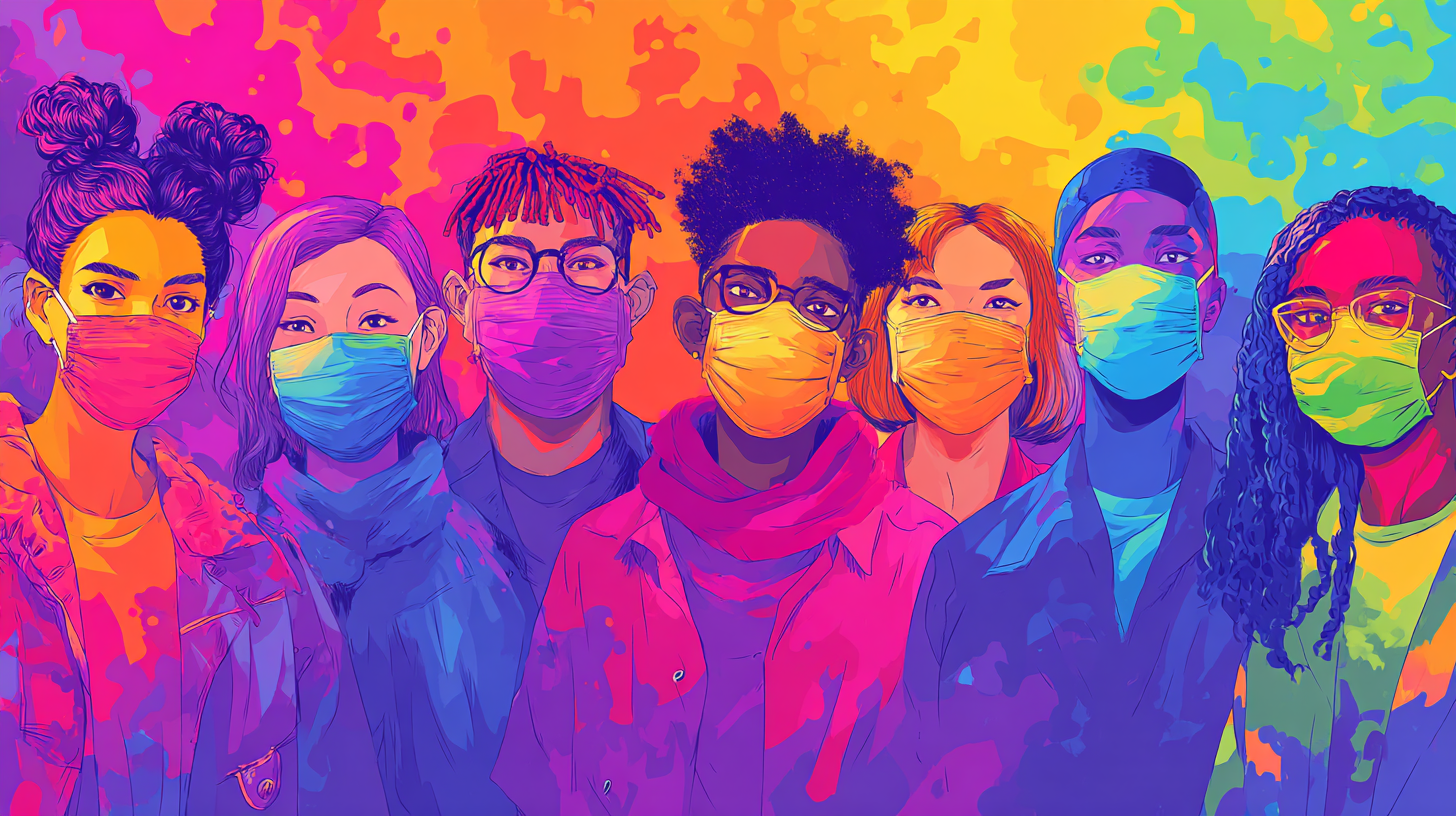
2020 was one of the toughest years our rainbow family has ever faced. As the pandemic quickly spread across the globe, many LGBTQ+ people lost their homes, income, and safety overnight.
In response, the PlanetRomeo Foundation shifted all its funding into emergency relief to provide support for those who needed immediate help to survive and stay safe. Instead of our usual funding cycles, we ran two special emergency rounds and funded 28 projects in 18 countries, for a total of €67,421.
Each of these projects was led by passionate local activists who refused to give up on their community, even when everything around them was collapsing. Together with our gracious donors, we turned solidarity into action.
Asia
In Uzbekistan, we supported a group helping queer people deal with deep isolation and persecution. Funding allowed the group to organize discreet meeting spaces and offered mental-health support so local queer people didn’t have to face uncertainty alone.
Over in Sri Lanka, two initiatives stepped up in big ways. One delivered food and hygiene packs to trans people and sex workers who suddenly lost all income under strict lockdowns. The other provided emergency help for LGBTQ+ individuals who were pushed out of jobs and housing as the crisis unfolded.
In Indonesia, our grant boosted awareness efforts and kept a local shelter open for young queer people forced out of their homes. That safety net meant warmth, meals, and a chance to rebuild when family support disappeared.
In Malaysia, funding covered essentials like food, rent, and mental-health assistance for LGBTQ+ individuals struggling with the economic and emotional fallout of COVID-19.
And in India, trans women received emergency food packages and safe shelter, ensuring basic stability for a community often sidelined from formal aid channels.
East Africa
In Kenya, funding for creativity and community care took center stage. One collective used art and performance to spark conversations about LGBTQ+ rights and safety, bringing visibility where it’s often risky. Other initiatives provided housing and legal support for queer women refugees displaced by the pandemic, delivered food and sanitation kits to young people in Nairobi’s informal settlements, and opened safe accommodation for homeless queer youth who had nowhere else to go.
In Uganda, where lockdowns and rising hostility made life especially tough, several projects ensured that vulnerable community members weren’t left behind. Grants helped provide shelter and medical support to trans women and lesbian activists at risk, offer safety resources and awareness training during a spike in violence, and secure emergency housing and advocacy for queer families in crisis. Additional support focused on protecting and empowering lesbian and bisexual women, and on helping trans women and gay men facing eviction and threats.
In Rwanda, funding kept LGBTQ+ refugees and asylum seekers housed and fed, while also expanding mental-health support and community outreach for queer people navigating isolation in Kigali.
And in Malawi, assistance went to LGBTQ+ individuals living with HIV, ensuring continued access to medication and safe spaces at a time when health systems were overwhelmed.
West & Southern Africa
In Cameroon, funding strengthened grassroots education and advocacy for human rights and equality. Local organizers used the support to engage communities, challenge stigma, and create spaces where LGBTQ+ people could learn about their rights and access help without fear.
In South Africa, one project provided emergency assistance to LGBTQ+ refugees and migrants who suddenly found themselves without income or housing due to the pandemic, while another created safe housing for homeless queer youth and sex workers during lockdown; a lifeline when shelters were overcrowded or unsafe.
In Zimbabwe, support went toward helping lesbian and bisexual women meet basic needs and stay connected through online empowerment sessions that offered community, coping tools, and solidarity at a distance.
And in Lesotho, funding helped queer activists stay organized by providing emergency supplies that kept local advocacy alive under COVID-19 restrictions.
Europe
In Greece, funding provided shelter and emergency aid for LGBTQ+ refugees and young people suddenly left without stable housing due to overstreched social systems.
In Serbia, assistance focused on Roma lesbian and bisexual women — a community often pushed to the margins in society. The grant helped strengthen protection, boost awareness, and build a space where women could find solidarity and practical support during an already challenging year.
And in Armenia, funding ensured that LGBTQ+ people in Yerevan had access to safe housing and food throughout the height of the COVID-19 crisis. This created a crucial refuge for those who had nowhere else to turn.
South America
In Brazil, funding strengthened safe spaces and access to health care for LGBTQ+ people living in rural settlements where support networks can be scarce and discrimination rampant. The grant helped keep community members healthy, informed, and able to gather safely in spite of the pandemic.
In Argentina, assistance went to rainbow families navigating both discrimination and sudden economic strain. Support helped them cover essentials, maintain stability, and access resources that aren’t always available through mainstream systems.
In 2020, small local heroes did incredible things with limited means. Each of the 28 funded projects became a lifeline; a roof, a meal, a phone call that said, you’re not alone. When the world closed down, our rainbow family came together stronger than ever. From Amsterdam to Kenya, from Sri Lanka to Brazil, one message was shared: love always finds a way.
The PlanetRomeo Foundation continues to support grassroots LGBTQ+ initiatives around the world. Every donation helps create safety, visibility, and empowerment where it’s needed most.